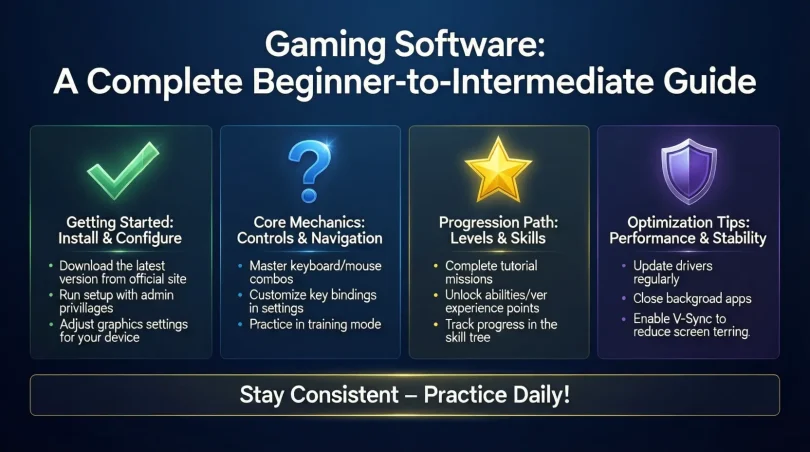

Introduction
Gaming software has become a core part of modern digital entertainment. From mobile games to advanced PC and console titles, gaming software powers every interactive experience players enjoy today. In simple words, without gaming software, games would not exist. It controls graphics, sound, gameplay, controls, and online features, making games fun, smooth, and engaging for users of all ages.
Over the past decade, gaming software has grown rapidly. Earlier, games were simple and offline. Today, they are highly interactive, realistic, and often connected to the internet. This change has made gaming software more powerful, complex, and valuable than ever before. Beginners now have access to easy-to-use software, while intermediate users can explore advanced tools, engines, and customization options.
Another important reason for the popularity of gaming software is accessibility. Anyone with a smartphone, computer, or console can install and use gaming software within minutes. Developers are also focusing on better user experience, security, and performance to meet player expectations.
In this detailed guide, you will learn what gaming software is, why it matters, how it works, and how to use it step by step. You will also explore its benefits, risks, common mistakes, FAQs, and expert tips. This article is written in simple English, making it easy to understand for beginners while still useful for intermediate readers. If you want a complete and practical understanding of gaming software, this guide is for you.
What is Gaming Software?
Gaming software refers to computer programs designed to create, run, and manage video games. It includes everything that makes a game playable, from graphics and sound to controls and game logic. Gaming software works on different platforms such as mobile phones, PCs, gaming consoles, and virtual reality devices.
There are different types of gaming software. Some are complete games, while others are tools used to develop games. For example, a racing game installed on your phone is gaming software. At the same time, a game engine used by developers to build that racing game is also gaming software.
Gaming software interacts directly with hardware like processors, graphics cards, controllers, and memory. It ensures smooth gameplay, realistic visuals, and responsive controls. Modern gaming software also supports online multiplayer modes, updates, and downloadable content.
In short, gaming software is the backbone of the gaming industry. It connects creativity with technology to deliver enjoyable gaming experiences to players around the world.
Why is Gaming Software Important?

Gaming software is important because it shapes how games look, feel, and perform. Without reliable gaming software, even powerful hardware cannot deliver a good gaming experience. It ensures stability, speed, and user satisfaction.
One major reason gaming software matters is user experience. Well-designed software reduces lag, crashes, and errors. This keeps players engaged and happy. Poor gaming software, on the other hand, can frustrate users and damage a game’s reputation.
Gaming software also drives innovation. New features like realistic physics, artificial intelligence opponents, and immersive sound effects are all possible due to advanced gaming software. It allows developers to push creative boundaries and deliver unique experiences.
Another key point is accessibility. Gaming software makes games available across different devices and operating systems. Whether someone plays on Android, iOS, Windows, or a console, gaming software ensures compatibility and performance.
Overall, gaming software is essential for players, developers, and the gaming industry as a whole.
Detailed Step-by-Step Guide
Step 1: Understanding Your Gaming Needs
Before choosing gaming software, you must understand your needs. Are you a player or a developer? Do you want casual games or high-end titles?
For players, consider your device, storage space, and internet connection. For developers, think about your skill level, target platform, and project size.
Clear goals help you select the right gaming software and avoid confusion later.
Step 2: Choosing the Right Platform
Gaming software is available for different platforms. Each platform has its own strengths.
Mobile gaming software is easy to use and widely accessible. PC gaming software offers better performance and customization. Console gaming software provides optimized and stable gameplay.
Choosing the right platform ensures better compatibility and performance.
Step 3: Installing Gaming Software Safely
Once you select gaming software, download it from a trusted source. Always check system requirements before installation.
Follow the installation steps carefully. Avoid skipping important permissions or settings. This reduces errors and improves performance.
After installation, restart your device if required.
Step 4: Configuring Settings for Best Performance
After installation, open the gaming software and adjust settings. Graphics, sound, and control options can be customized.
Lower settings improve performance on weaker devices. Higher settings enhance visuals on powerful systems.
Proper configuration ensures smooth gameplay and reduces lag.
Step 5: Updating and Maintaining Software
Gaming software needs regular updates. Updates fix bugs, improve security, and add new features.
Enable automatic updates if possible. Also, clear cache and unused files to keep the software running smoothly.
Maintenance is key to long-term performance.
Benefits of Gaming Software
- Improves entertainment and engagement
- Enhances cognitive and problem-solving skills
- Supports multiplayer and social interaction
- Offers realistic graphics and sound
- Enables creative game development
- Provides regular updates and new content
- Works across multiple devices and platforms
Disadvantages / Risks
- Can be resource-intensive on low-end devices
- Risk of addiction if not managed properly
- Security issues from untrusted sources
- Frequent updates may consume data
- Compatibility problems with older hardware
- In-game purchases can increase costs
Common Mistakes to Avoid
One common mistake is downloading gaming software from unknown sources. This can lead to malware or data loss. Always use trusted platforms.
Another mistake is ignoring system requirements. Installing heavy gaming software on weak devices causes lag and crashes.
Many users also skip updates. Outdated gaming software may have bugs and security risks.
Over-customizing settings without understanding them is another issue. This can reduce performance instead of improving it.
Avoid these mistakes to enjoy a better gaming experience.
FAQs
1. What devices support gaming software?
Gaming software supports mobile phones, PCs, laptops, gaming consoles, and VR devices. The supported device depends on the software type and system requirements.
2. Is gaming software free to use?
Some gaming software is free, while others are paid. Many games offer free versions with optional in-app purchases or premium upgrades.
3. Can gaming software work offline?
Yes, many gaming software titles support offline play. However, online features like multiplayer and updates require an internet connection.
4. How often should gaming software be updated?
You should update gaming software whenever a new update is available. Regular updates improve performance, security, and features.
5. Is gaming software safe for children?
Gaming software can be safe if age ratings and parental controls are used. Parents should monitor content and screen time.
6. Can I use one gaming software on multiple devices?
Some gaming software allows multi-device use through accounts or cloud saves. This depends on the developer and platform policies.
Expert Tips & Bonus Points
Always read reviews before installing gaming software. User feedback helps identify performance and security issues.
Keep your device drivers updated for better compatibility with gaming software.
Use performance monitoring tools to track system usage during gameplay.
Take regular breaks to avoid fatigue and maintain healthy gaming habits.
For developers, start with simple gaming software tools before moving to advanced engines.
Backup game data regularly to avoid losing progress.
Conclusion
Gaming software plays a vital role in shaping today’s digital gaming experiences. From simple mobile games to complex PC and console titles, it controls how games function, look, and feel. For beginners, understanding gaming software helps in making better choices and avoiding common problems. For intermediate users, it opens the door to customization, performance tuning, and even game development.
This guide explained what gaming software is, why it is important, and how to use it step by step. You also learned about its benefits, risks, common mistakes, and expert tips. With the right approach, gaming software can provide endless entertainment, learning opportunities, and creative possibilities.
As the gaming industry continues to grow, gaming software will become even more advanced and user-friendly. Staying informed and making smart choices will help you get the best experience possible. Whether you play games for fun or plan to build them, a solid understanding of gaming software will always be valuable.