
Introduction
Robotics trends are transforming the way humans live, work, and interact with technology. Over the last decade, robots have moved far beyond factory floors and research labs. Today, they are present in homes, hospitals, schools, farms, warehouses, and even public spaces. These changes are not happening overnight. Instead, they are driven by steady innovation in hardware, software, sensors, and intelligent systems. As a result, robotics trends are becoming an important topic for students, professionals, business owners, and policymakers alike.
For beginners, robotics trends may seem complex at first. However, when explained in simple terms, the core ideas are easy to understand. Robots are machines designed to perform tasks with accuracy, speed, and consistency. Modern robots are no longer limited to repetitive actions. They can learn, adapt, and collaborate with humans. This shift has opened new opportunities across many industries while also raising important questions about jobs, ethics, and safety.
For intermediate readers, understanding robotics trends helps in making informed career and business decisions. From healthcare automation to smart manufacturing, robots are changing workflows and improving productivity. Governments and companies are investing heavily in robotics because of its long-term benefits. Therefore, learning about current and future robotics trends is essential for staying competitive in a fast-changing world.
This article explains robotics trends in a clear and practical way. It covers what robotics trends are, why they matter, how they are developing step by step, and what benefits and risks they bring. By the end, you will have a strong understanding of where robotics is heading and how it may affect your future.
What is Robotics Trends?
Robotics trends refer to the ongoing developments and directions in the design, use, and evolution of robots. These trends highlight how robotic technologies are improving and expanding into new areas. Instead of focusing on one type of robot, robotics trends cover a wide range of applications, from industrial machines to service robots and intelligent systems.
At their core, robotics trends reflect changes in technology and human needs. For example, as industries demand faster production, robots are becoming more efficient and precise. Similarly, as healthcare systems face staff shortages, robots are being designed to assist doctors and nurses. These trends show how robotics adapts to real-world challenges.
Another important aspect of robotics trends is integration. Modern robots are often connected to other systems, such as data platforms and smart devices. This connection allows robots to collect information, make decisions, and improve performance over time. As a result, robotics trends are closely linked with automation and digital transformation.
In simple words, robotics trends describe where robotics is today and where it is going next. They help us understand how robots are becoming smarter, safer, and more useful in everyday life.
Why is Robotics Trends Important?
Robotics trends are important because they shape the future of work, education, and society. One major reason is productivity. Robots can perform tasks faster and with fewer errors than humans in many situations. This leads to higher output and better quality, especially in manufacturing and logistics.
Another reason robotics trends matter is safety. Robots can handle dangerous tasks such as heavy lifting, chemical handling, or disaster response. By doing so, they reduce the risk of injury to humans. This is especially valuable in industries like mining, construction, and emergency services.
Robotics trends also support economic growth. Companies that adopt robotic solutions often become more competitive. They can reduce costs, improve efficiency, and create new products and services. Over time, this growth can lead to new job opportunities in robot design, maintenance, and programming.
Education is another area influenced by robotics trends. Schools and universities are introducing robotics courses to prepare students for future careers. Learning about robots helps students develop problem-solving and technical skills that are in high demand.
Finally, robotics trends are important because they raise ethical and social questions. As robots become more capable, society must decide how to use them responsibly. Understanding these trends helps individuals and organizations make better decisions about technology adoption.
Detailed Step-by-Step Guide

Step 1: Advancements in Robot Design
The first major step in robotics trends is improved robot design. Modern robots are becoming smaller, lighter, and more flexible. Engineers are using new materials and designs to create robots that can move smoothly and operate in tight spaces.
In addition, modular designs are gaining popularity. These allow robots to be easily upgraded or repaired. As a result, companies can extend the life of their robotic systems without replacing them entirely.
Better design also improves safety. Robots now include protective features such as soft edges and collision detection. This makes them suitable for working alongside humans.
Step 2: Integration of Intelligent Systems
Another key step in robotics trends is the integration of intelligent systems. Robots are no longer simple machines that follow fixed instructions. They can now analyze data and make decisions.
This intelligence allows robots to adapt to changing environments. For example, a warehouse robot can adjust its route if an obstacle appears. This flexibility increases efficiency and reduces downtime.
Moreover, intelligent systems help robots learn from experience. Over time, they can improve performance and accuracy, making them more valuable in complex tasks.
Step 3: Human-Robot Collaboration
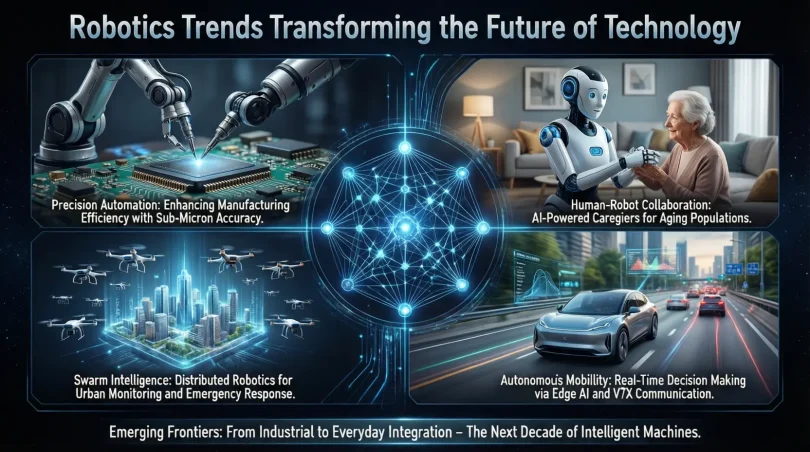
Human-robot collaboration is a major focus in current robotics trends. Instead of replacing humans, many robots are designed to assist them. These collaborative robots work safely alongside people.
In manufacturing, for example, robots may handle heavy lifting while humans focus on quality control. This division of labor improves productivity and reduces physical strain.
Collaboration also builds trust. When humans see robots as helpful tools, adoption becomes easier. This trend is especially important in healthcare and service industries.
Step 4: Expansion into New Industries
Robotics trends show a clear expansion into new industries. Agriculture now uses robots for planting, harvesting, and monitoring crops. This helps farmers increase yields and reduce waste.
In healthcare, robots assist in surgery, rehabilitation, and patient care. These applications improve precision and support medical staff.
Retail and hospitality are also adopting robots for tasks like cleaning, delivery, and customer service. This expansion shows how versatile modern robots have become.
Step 5: Focus on Ethical and Social Impact
The final step in robotics trends is addressing ethical and social impact. As robots become more common, concerns about privacy, jobs, and safety increase.
Developers and policymakers are working together to create guidelines for responsible robot use. This includes clear rules on data handling and human oversight.
By focusing on ethics, robotics trends aim to ensure technology benefits society as a whole.
Benefits of Robotics Trends
- Increased productivity and efficiency in many industries
- Improved safety by handling dangerous tasks
- Consistent quality and reduced human error
- Support for aging populations through care robots
- Growth of new careers and technical skills
- Better use of resources and reduced waste
Disadvantages / Risks
- High initial cost of robotic systems
- Risk of job displacement in some sectors
- Technical failures and maintenance challenges
- Ethical concerns about data and privacy
- Dependence on technology for critical tasks
- Unequal access to advanced robotics
Common Mistakes to Avoid
One common mistake is adopting robotics trends without clear goals. Organizations sometimes invest in robots without understanding their real needs. This leads to poor results and wasted resources.
Another mistake is ignoring employee training. Robots require skilled operators and maintenance staff. Without proper training, systems may fail or underperform.
Some companies also overlook ethical considerations. Failing to address privacy and safety can damage trust and reputation.
Finally, relying too much on automation without human oversight can be risky. Balanced systems that combine human judgment and robotic efficiency work best.
FAQs
What are robotics trends in simple terms?
Robotics trends describe how robots are improving and being used in new ways. They show the direction robotics technology is moving in different industries.
How do robotics trends affect jobs?
Robotics trends may replace some repetitive jobs, but they also create new roles. Many new jobs focus on robot design, programming, and maintenance.
Are robotics trends only for big companies?
No, robotics trends are becoming accessible to small businesses as well. Affordable robots and flexible systems allow wider adoption.
How are robotics trends used in healthcare?
In healthcare, robots assist in surgery, patient care, and rehabilitation. They improve accuracy and support medical professionals.
What skills are needed to work with robotics trends?
Skills include basic programming, problem-solving, and technical understanding. Communication and teamwork are also important.
Are robotics trends safe for humans?
Most modern robots are designed with safety features. When used correctly, they can work safely alongside humans.
Expert Tips & Bonus Points
Stay updated with robotics trends by following industry news and educational resources. Continuous learning helps you adapt to changes.
Start small when adopting robotics. Test systems in limited areas before full implementation.
Encourage collaboration between technical and non-technical teams. This ensures robots meet real needs.
Focus on ethical use and transparency. Clear communication builds trust among users and customers.
Finally, remember that robotics trends are tools, not solutions by themselves. Success depends on thoughtful planning and human involvement.
Conclusion
Robotics trends are shaping a future where humans and machines work together more closely than ever before. From factories and farms to hospitals and homes, robots are becoming essential tools for efficiency, safety, and innovation. Understanding these trends helps individuals and organizations prepare for change instead of reacting to it.
For beginners, robotics trends offer an exciting introduction to modern technology. They show how creative engineering and practical needs come together to solve real problems. For intermediate readers, these trends provide insights into career paths and business opportunities. As robotics continues to evolve, staying informed becomes a valuable skill.
At the same time, robotics trends remind us of the importance of responsibility. Technology should serve human values, not replace them. Ethical considerations, proper training, and balanced adoption are key to long-term success.
Looking ahead, robotics trends will continue to grow and diversify. Those who understand and embrace them thoughtfully will be better positioned to benefit. By learning today, you take a meaningful step toward a smarter and more connected future.