
Introduction
The world is becoming more connected every day, and one of the biggest reasons behind this change is IoT developments. From smart homes and wearable devices to connected factories and smart cities, the Internet of Things is quietly transforming how people live, work, and interact with technology. Even if you do not notice it directly, IoT-powered systems are already part of daily life.
In simple words, IoT allows devices to communicate with each other using the internet. These devices collect data, share it, and take smart actions without constant human input. Over the last few years, IoT developments have moved far beyond basic sensors. Today, they include advanced automation, real-time analytics, and intelligent decision-making.
For beginners, IoT may sound complex, but the idea is quite simple. A device senses information, sends it through the internet, and receives instructions in return. For intermediate readers, understanding how IoT is evolving helps in choosing better tools, building smarter systems, and planning future-ready solutions.
This article is designed to explain IoT developments in a clear, friendly, and practical way. You will learn what IoT is, why it matters, how it works step by step, and where it is heading. Real-life examples, benefits, risks, and expert tips are also included. Whether you are a student, professional, or tech enthusiast, this guide will help you understand IoT with confidence.
What is IoT Developments?
IoT developments refer to the continuous improvement and expansion of Internet of Things technologies. IoT itself is a network of physical devices that collect and exchange data using the internet. These devices can include sensors, machines, vehicles, home appliances, and even wearable items.
In earlier stages, IoT systems were simple and limited. Devices only sent basic data, such as temperature or location. Today, modern IoT developments focus on smarter devices, faster communication, and better data processing. Cloud computing, edge computing, and automation now play a major role in IoT systems.
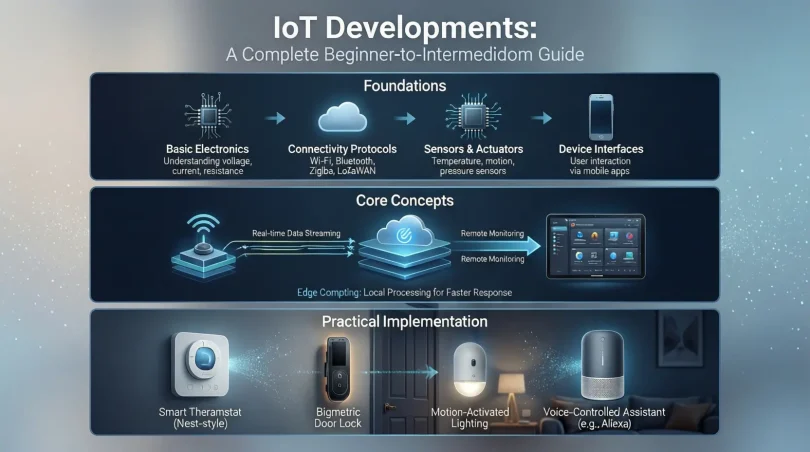
Another important aspect of IoT developments is integration. Devices no longer work alone. They are connected to mobile apps, dashboards, and management platforms. This allows users to monitor performance, control systems remotely, and receive instant alerts.
IoT is not limited to one industry. It is used in healthcare, agriculture, transportation, education, and manufacturing. As technology grows, IoT systems are becoming more affordable, reliable, and scalable. This makes them accessible to individuals, small businesses, and large organizations alike.
Why is IoT Developments Important?
IoT developments are important because they improve efficiency, accuracy, and decision-making across many areas of life. By connecting devices and systems, IoT reduces manual work and human error. This saves time and resources.
One key reason IoT matters is real-time data. Instead of waiting for reports or updates, businesses and individuals can access live information. This allows faster responses to problems and better planning.
Another reason is automation. IoT systems can perform tasks automatically based on data and predefined rules. For example, a smart thermostat adjusts temperature without manual input. In industries, machines can schedule maintenance before breakdowns happen.
IoT developments also support innovation. New services and business models are created using connected devices. This leads to better customer experiences and improved service quality.
Finally, IoT plays a major role in sustainability. Smart energy systems, water management tools, and waste monitoring solutions help reduce environmental impact. As a result, IoT contributes to smarter and more responsible use of resources.
Detailed Step-by-Step Guide
Step 1: Data Collection Through Devices
The first step in IoT developments is data collection. Devices such as sensors and trackers gather information from their environment. This data can include temperature, motion, pressure, speed, or location.
Sensors are designed for specific tasks. For example, a humidity sensor measures moisture levels, while a GPS tracker records movement. These devices work continuously or at set intervals.
Accurate data collection is critical. Poor-quality data can lead to wrong decisions. Modern IoT devices are built to collect reliable and precise information.
Step 2: Connectivity and Data Transmission
Once data is collected, it needs to be transmitted. IoT systems use various communication methods such as Wi-Fi, mobile networks, Bluetooth, or specialized protocols.
Connectivity ensures that data reaches the right platform or system. Stable and secure connections are essential for smooth operation. New IoT developments focus on faster and more energy-efficient communication methods.
This step also includes data encryption. Secure transmission protects sensitive information from unauthorized access.
Step 3: Data Processing and Storage
After transmission, data is processed and stored. This can happen in cloud servers or at the edge, closer to the device. Processing involves organizing, filtering, and analyzing the data.
Advanced IoT developments use intelligent systems to identify patterns and trends. For example, a system can detect unusual behavior and send alerts.
Proper storage allows historical analysis. This helps in understanding long-term performance and making better decisions.
Step 4: User Interface and Control
The final step is interaction. Users access IoT systems through dashboards, mobile apps, or web platforms. These interfaces show data in simple charts and reports.
Users can also send commands back to devices. For example, turning off a machine or adjusting settings remotely. This two-way communication makes IoT systems flexible and user-friendly.
Benefits of IoT Developments
- Improved efficiency through automation and real-time monitoring
- Better decision-making using accurate and timely data
- Reduced operational costs and manual effort
- Enhanced safety and risk management
- Greater convenience for users
- Support for smart cities and sustainable solutions
- Scalable systems for future growth
Disadvantages / Risks
- Data privacy and security concerns
- High initial setup costs
- Dependence on internet connectivity
- Technical complexity for beginners
- Maintenance and update challenges
- Compatibility issues between devices
Common Mistakes to Avoid

One common mistake is ignoring security. Weak passwords and unprotected networks can lead to data breaches. Security should be planned from the start.
Another mistake is choosing incompatible devices. Not all IoT products work well together. Compatibility checks are important before purchase.
Overcomplicating systems is also a problem. Beginners often add unnecessary features, making systems hard to manage. Simple designs work best initially.
Ignoring maintenance is another issue. Devices need regular updates and monitoring to function properly.
FAQs
What are IoT developments in simple terms?
IoT developments mean improvements in connected devices that collect and share data. These improvements make systems smarter, faster, and more useful.
Is IoT only for big companies?
No, IoT is for everyone. Small businesses, homes, and individuals can use IoT devices easily and affordably.
How secure are modern IoT systems?
Security has improved with encryption and authentication. However, users must follow best practices to stay safe.
Can IoT work without the internet?
Some IoT systems use local networks, but full functionality usually requires internet access.
What skills are needed to work with IoT?
Basic networking knowledge, data understanding, and system management skills are helpful.
What is the future of IoT developments?
IoT will become more intelligent, automated, and integrated into daily life.
Expert Tips & Bonus Points
Start small and scale gradually. Choose reliable devices from trusted vendors. Always update firmware and software. Focus on data quality, not quantity. Plan security from day one. Test systems regularly to avoid failures. Keep user experience simple and clear.
Conclusion
IoT developments are shaping the future of technology by connecting the physical and digital worlds. From simple sensors to complex smart systems, IoT is changing how tasks are performed and decisions are made. Its impact can be seen in homes, industries, healthcare, and cities.
For beginners, understanding the basics of IoT helps remove fear and confusion. For intermediate users, learning about recent IoT developments opens doors to innovation and efficiency. While challenges such as security and complexity exist, careful planning and smart choices can reduce risks.
As technology continues to evolve, IoT will become even more powerful and accessible. Those who understand and adopt it early will benefit the most. By focusing on practical use, security, and continuous learning, anyone can take advantage of IoT developments and be ready for a connected future.