
Introduction
Social media tools have become an essential part of modern digital life. Whether you are a small business owner, a freelancer, a student, or a content creator, managing social media without the right tools can feel overwhelming. Today, social media platforms are not just for sharing photos or chatting with friends. They are powerful marketing, branding, and communication channels. That is why social media tools are now more important than ever.
In simple terms, social media tools help you plan, create, publish, manage, analyze, and improve your social media activities. Instead of manually posting content every day and guessing what works, these tools make the process smarter and more organized. They save time, reduce stress, and help you achieve better results with less effort.
For beginners, social media tools provide structure and guidance. For intermediate users, they unlock deeper insights and automation. Businesses use them to grow their audience, improve engagement, and increase sales. Individuals use them to build personal brands and stay consistent online.
This guide is written in simple English to help you understand everything step by step. You will learn what social media tools are, why they matter, how to use them properly, and what mistakes to avoid. Most importantly, you will learn how to choose and use social media tools in a natural and effective way without feeling confused or overwhelmed.
What Are Social Media Tools?
Social media tools are software platforms or applications designed to help users manage their social media accounts more efficiently. These tools support different tasks such as content creation, scheduling posts, replying to comments, tracking performance, and analyzing audience behavior.
Instead of logging into each social media platform separately, social media tools allow you to handle everything from one dashboard. This makes work faster and more organized. Some tools focus on posting and scheduling, while others specialize in analytics, design, or audience management.
Social media tools are used by individuals, businesses, agencies, and marketers. They are helpful for anyone who wants to stay active and professional on social media. From planning posts in advance to checking what content performs best, these tools simplify complex tasks.
In short, social media tools act like a smart assistant that helps you manage your online presence more effectively and with better results.
Why Are Social Media Tools Important?
Social media tools are important because social media has become highly competitive. Posting randomly without strategy often leads to poor engagement and wasted effort. These tools help you work smarter, not harder.
First, they save time. You can schedule posts in advance and focus on other tasks. Second, they improve consistency, which is key for building trust and visibility. Third, they provide data and insights so you know what is working and what is not.
Another major benefit is better organization. With social media tools, you can plan campaigns, track conversations, and manage multiple accounts easily. They also help teams collaborate smoothly by assigning roles and approvals.
Most importantly, social media tools help you make informed decisions. Instead of guessing, you rely on real data. This leads to better content, stronger engagement, and long-term growth.
Detailed Step-by-Step Guide to Using Social Media Tools
Step 1: Define Your Goals
Before using any social media tools, clearly define your goals. Decide whether you want to increase followers, boost engagement, drive website traffic, or build a brand. Clear goals help you choose the right tools and features.
Step 2: Choose the Right Tools
Not all social media tools are the same. Some are best for scheduling, while others focus on analytics or content design. Beginners should start with simple tools that offer basic features and an easy interface.
Step 3: Connect Your Social Media Accounts
After selecting your tools, connect all your social media accounts. Most tools support major platforms like Facebook, Instagram, Twitter, LinkedIn, and others. This step allows centralized management.
Step 4: Plan Your Content
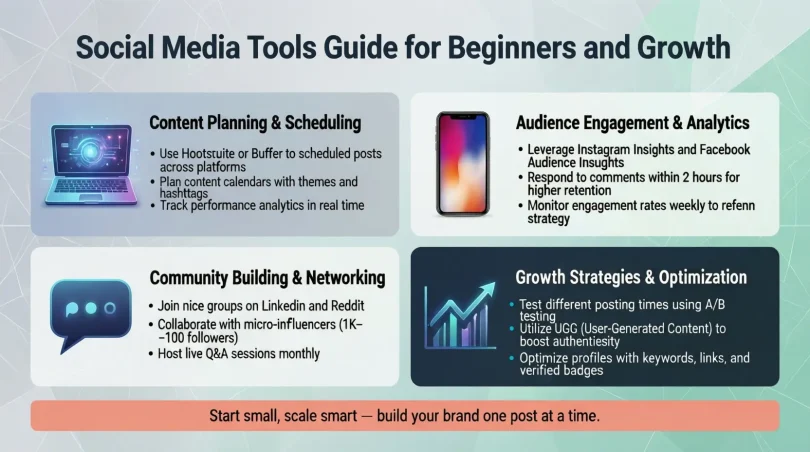
Use the content calendar feature to plan posts in advance. Decide what type of content you will post and when. Planning helps maintain consistency and reduces last-minute stress.
Step 5: Create and Schedule Posts
Create high-quality content and schedule it for the best times. Social media tools allow you to post automatically, ensuring your content reaches your audience at the right moment.
Step 6: Monitor Engagement
Check comments, messages, and mentions regularly. Many social media tools show all interactions in one place, making it easier to respond quickly and build relationships.
Step 7: Analyze Performance
Use analytics features to track performance. Look at metrics like reach, engagement, clicks, and growth. This data helps you improve future content.
Step 8: Optimize and Improve
Based on insights, adjust your strategy. Improve content quality, posting times, and messaging. Social media tools make optimization easier and more effective.
Benefits of Social Media Tools

- Save time through automation and scheduling
- Improve consistency across platforms
- Provide clear performance insights
- Help manage multiple accounts easily
- Increase engagement and audience growth
- Support better planning and organization
- Reduce manual work and errors
- Enable team collaboration
- Improve decision-making with data
- Enhance overall social media strategy
Disadvantages and Risks of Social Media Tools
- Over-automation can reduce authenticity
- Some tools can be expensive
- Learning curve for beginners
- Dependence on third-party platforms
- Limited features in free versions
- Risk of posting errors if not reviewed
- Analytics may be confusing at first
- Tool outages can affect schedules
Common Mistakes to Avoid
One common mistake is using too many social media tools at once. This creates confusion and reduces efficiency. It is better to master one or two tools before expanding.
Another mistake is relying completely on automation. While scheduling is helpful, real-time interaction is still important. Avoid ignoring comments and messages.
Many users also forget to analyze results. Posting without checking performance leads to repeated mistakes. Always review analytics and adjust your strategy.
Lastly, avoid copying competitors blindly. Use social media tools for inspiration, but create original content that reflects your unique voice and goals.
Frequently Asked Questions (FAQs)
What are social media tools used for?
Social media tools are used to manage, schedule, analyze, and improve social media activities. They help users save time, stay consistent, and grow their online presence.
Are social media tools suitable for beginners?
Yes, many social media tools are designed for beginners. They offer simple interfaces and basic features that are easy to learn and use.
Do social media tools really save time?
Yes, social media tools save a lot of time by automating posting, organizing content, and centralizing account management.
Can small businesses benefit from social media tools?
Absolutely. Small businesses use social media tools to manage limited resources, reach more customers, and compete effectively online.
Are free social media tools effective?
Free tools can be effective for basic needs. However, advanced features often require paid plans for better results.
How often should analytics be checked?
Analytics should be checked at least once a week. Regular review helps you understand trends and improve performance.
Expert Tips and Bonus Points
Always start simple and grow gradually. Choose tools that match your current needs, not just popular ones. Focus on quality over quantity when posting content.
Use analytics to guide decisions, not emotions. Test different content types and posting times. Learn from both success and failure.
Stay updated with new features and trends. Social media tools evolve constantly, and learning helps you stay ahead.
Most importantly, keep your content human and authentic. Tools should support your strategy, not replace genuine communication.
Conclusion
Social media tools have transformed the way people and businesses manage their online presence. In today’s fast-paced digital world, relying on manual posting and guesswork is no longer effective. These tools bring structure, clarity, and efficiency to social media management, making growth more achievable for beginners and intermediate users alike.
By understanding what social media tools are and how to use them properly, you can save time, improve consistency, and make smarter decisions. From planning content to analyzing results, these tools support every stage of your social media journey. However, success depends on how wisely you use them. Balance automation with real engagement, and always focus on creating value for your audience.
In the long run, social media tools are not just about convenience. They are about building stronger connections, improving visibility, and achieving meaningful results. When used correctly, they become powerful partners in your digital growth journey and help you move forward with confidence and clarity.