
Introduction
In today’s digital world, online apps and platforms have become a regular part of daily life. From students attending virtual classes to businesses managing teams remotely, these tools are everywhere. Online apps and platforms help people communicate, learn, work, shop, and entertain themselves without physical limits. Because of this, they are now essential for both personal and professional growth.
The rapid growth of the internet and smartphones has made online apps and platforms more powerful and accessible than ever before. Beginners can start using them easily, while intermediate users can explore advanced features to save time and increase productivity. Whether you want to manage tasks, learn new skills, sell products, or connect with others, there is an online solution available for you.
Many people feel confused when choosing the right app or platform. Some worry about security, while others struggle with learning new features. This guide is designed to remove that confusion. It explains online apps and platforms in simple English, using practical examples and clear steps.
Throughout this article, you will learn what online apps and platforms are, why they matter, how to use them correctly, and what mistakes to avoid. You will also discover their benefits, risks, and expert tips to use them safely and effectively. By the end, you will feel confident using online apps and platforms for everyday needs and long-term success.
What is Online Apps and Platforms?
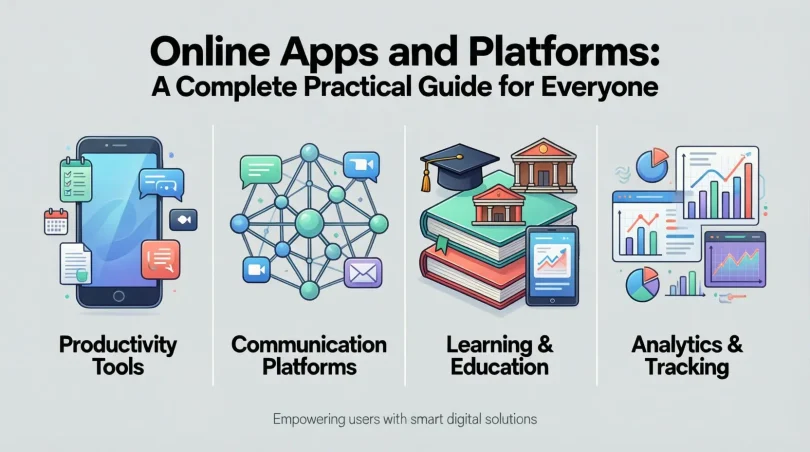
Online apps and platforms are digital tools that work through the internet to provide services, features, or solutions to users. An online app is usually a software application that runs on a browser or mobile device, while a platform is a broader system that supports multiple services or users in one place.
For example, an online learning app helps students attend classes, submit assignments, and interact with teachers. A business platform may allow teams to collaborate, share files, and track progress. Both are designed to make tasks easier and faster.
Online apps and platforms do not require complex installation in many cases. Most of them can be accessed using a web browser or downloaded from official app stores. They are updated regularly, which means users always get new features and security improvements.
These tools are used in education, healthcare, finance, entertainment, and many other fields. Their flexibility and ease of access make them suitable for users of all ages and skill levels.
Why is Online Apps and Platforms Important?
Online apps and platforms play a key role in modern life. They save time, reduce effort, and connect people across different locations. Without them, many daily tasks would become slow and complicated.
One major reason for their importance is accessibility. People can access services anytime and anywhere with an internet connection. This is especially helpful for remote learning, online jobs, and digital businesses.
Another reason is efficiency. Online apps and platforms automate tasks like scheduling, data storage, communication, and payments. This allows users to focus on important work instead of manual processes.
They also support innovation. New ideas and services are launched quickly using online platforms, giving users more choices and better experiences. For beginners, these tools open doors to learning and earning opportunities that were not available before.
Detailed Step-by-Step Guide
Step 1: Identify Your Purpose
Before choosing any online app or platform, clearly define your goal. Ask yourself what problem you want to solve. It could be learning, communication, productivity, or entertainment.
Knowing your purpose helps you avoid unnecessary features and confusion. It also saves time and money.
Step 2: Research Available Options
Once your purpose is clear, explore different online apps and platforms that match your needs. Read descriptions, check features, and compare usability.
Look for platforms that are beginner-friendly and have positive user feedback. Avoid choosing tools that feel too complex at the start.
Step 3: Create an Account
Most online apps and platforms require account registration. Use a strong password and accurate information. Always verify your email or phone number if required.
This step ensures account security and smooth access to features.
Step 4: Learn Basic Features
After signing up, spend time exploring basic features. Watch tutorials, read help sections, or use demo modes if available.
Understanding basic functions builds confidence and reduces mistakes later.
Step 5: Customize Settings
Adjust settings according to your preferences. This may include notifications, privacy options, language, or display layout.
Customization improves comfort and productivity while using the platform.
Step 6: Use Advanced Tools Gradually
As you gain experience, start using advanced features. Do not rush this step. Learn one feature at a time and practice regularly.
This approach helps you grow from a beginner to an intermediate user smoothly.
Benefits of Online Apps and Platforms

- Easy access from anywhere at any time
- Saves time and increases productivity
- Cost-effective compared to traditional methods
- Supports remote work and online learning
- Offers automation and smart tools
- Encourages collaboration and communication
- Regular updates and improvements
- Scalable for personal and business use
Disadvantages / Risks
- Dependence on internet connection
- Data privacy and security concerns
- Learning curve for new users
- Risk of distractions and overuse
- Technical issues or downtime
- Subscription or hidden costs
- Limited offline functionality
Common Mistakes to Avoid
Many users make mistakes when using online apps and platforms. One common mistake is choosing too many tools at once. This creates confusion and reduces efficiency.
Another mistake is ignoring security settings. Weak passwords and poor privacy choices can lead to data loss. Users should also avoid skipping tutorials, as this slows learning.
Overusing features without understanding them is another problem. It can cause errors and frustration. Lastly, not updating apps regularly may expose users to bugs and security risks.
Avoiding these mistakes helps users enjoy a smoother and safer experience.
FAQs
What are online apps and platforms used for?
Online apps and platforms are used for communication, learning, business management, entertainment, and many other activities. They simplify tasks and improve efficiency.
Are online apps and platforms safe to use?
Most are safe if users follow security practices such as strong passwords and privacy settings. Choosing trusted platforms also reduces risks.
Can beginners use online apps easily?
Yes, many online apps and platforms are designed for beginners with simple interfaces and tutorials.
Do online platforms require payment?
Some platforms are free, while others offer paid plans with advanced features. Users can choose based on their needs.
How can I choose the right platform?
Identify your goal, compare features, and start with a free version if available. User reviews can also help.
Can online apps work offline?
Some apps offer limited offline features, but most require an internet connection for full functionality.
Expert Tips & Bonus Points
Experts recommend starting small and mastering one platform at a time. Always keep apps updated and review privacy settings regularly.
Using cloud backups and learning keyboard shortcuts can improve efficiency. Setting usage limits also helps maintain balance and avoid burnout.
Exploring community forums and support sections can provide quick solutions and tips. These habits help users get the most value from online apps and platforms.
Conclusion
Online apps and platforms have transformed the way people live, learn, and work. They provide convenient solutions for everyday tasks and open new opportunities for growth. From communication to productivity, these tools offer flexibility and efficiency that traditional methods cannot match.
For beginners and intermediate users, understanding how online apps and platforms work is essential. By choosing the right tools, learning features step by step, and avoiding common mistakes, users can enjoy a smooth experience. Awareness of risks and security practices further ensures safe usage.
As technology continues to evolve, online apps and platforms will become even more important. Those who adapt early and learn continuously will benefit the most. With the right approach, these digital tools can support personal development, professional success, and long-term convenience in an increasingly connected world.