
Introduction
Emerging technologies are changing how we live, learn, work, and do business in almost every part of the world. From smart devices in our homes to advanced systems used by global companies, these innovations are shaping the future faster than ever before. For beginners and intermediate learners, understanding emerging technologies can feel confusing because new terms and trends appear almost daily. However, with the right explanation, these concepts become much easier to understand and apply in real life.
In simple words, emerging technologies refer to new and rapidly developing tools, systems, and methods that have the potential to create a big impact on society and industries. These technologies are not just ideas anymore. They are already being tested, improved, and adopted across healthcare, education, finance, manufacturing, and entertainment. As a result, individuals who understand emerging technologies gain a strong advantage in careers, businesses, and decision-making.
Moreover, emerging technologies are not limited to technical experts. Students, teachers, entrepreneurs, and everyday users all benefit from knowing how these technologies work and why they matter. By learning about them early, people can adapt more easily to changes and avoid being left behind. This article explains emerging technologies in a clear, friendly, and practical way. It covers their importance, benefits, risks, and real-world examples so you can understand the topic without feeling overwhelmed.
Future Trends of Emerging Technologies
The future of emerging technologies looks very promising as innovation continues to grow at a rapid pace. In the coming years, many technologies that are still developing today will become a regular part of daily life. Businesses, schools, and governments are already preparing for these changes to stay competitive and efficient.
One major trend is the deeper integration of technology into everyday activities. Smart systems will become more personalized, helping users save time and make better decisions. Automation is also expected to increase, allowing routine tasks to be handled more efficiently while humans focus on creative and strategic work.
Another important trend is the focus on sustainability. Emerging technologies will play a key role in reducing energy waste, improving resource management, and supporting environmentally friendly solutions. At the same time, ethical use and data protection will gain more attention, ensuring technology benefits society as a whole.
Overall, future trends show that emerging technologies will continue to evolve, offering smarter, safer, and more connected solutions for individuals and industries alike.
What is Emerging Technologies?
Emerging technologies are new or evolving technologies that are still developing but show strong potential to change existing systems or create entirely new ones. These technologies often grow quickly and improve over time as research, investment, and adoption increase.
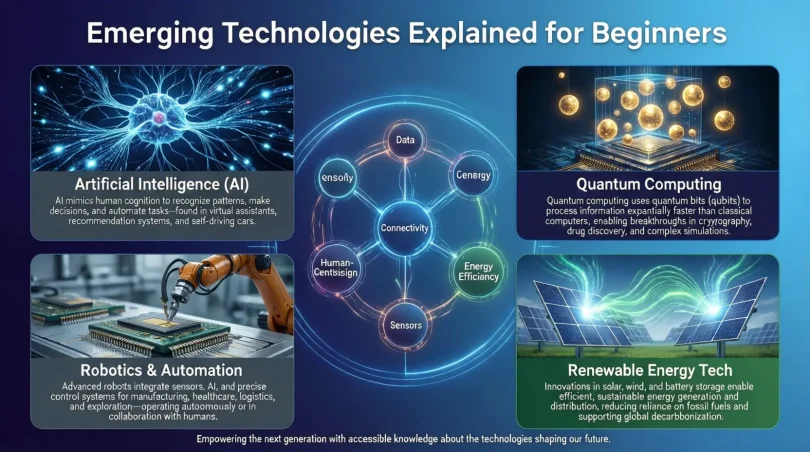
Unlike traditional technologies, emerging technologies may not be fully mature. However, they attract attention because they solve problems in smarter, faster, or more efficient ways. Examples include artificial intelligence, blockchain, virtual reality, and the Internet of Things. Each of these technologies started as an idea and slowly became useful in daily life.
In simple terms, emerging technologies represent innovation in action. They focus on improving human experiences, increasing productivity, and creating new opportunities. As technology continues to advance, what is considered “emerging” today may become common tomorrow.
Why is Emerging Technologies Important?
Emerging technologies are important because they drive progress and innovation across all industries. They help businesses improve efficiency, reduce costs, and deliver better products and services. At the same time, they make daily life more convenient and connected for individuals.
Another reason emerging technologies matter is their role in solving global challenges. From improving healthcare systems to supporting clean energy solutions, these technologies offer tools to address complex problems. For example, data-driven systems can improve medical diagnosis, while smart energy grids reduce waste.
Additionally, emerging technologies create new career paths and learning opportunities. Many modern jobs did not exist a decade ago. Understanding these technologies helps people prepare for future roles and stay competitive in the job market. Therefore, learning about emerging technologies is no longer optional. It is becoming a basic requirement for growth and success.
Detailed Step-by-Step Guide
Step 1: Identifying Emerging Technologies
The first step is to recognize which technologies are considered emerging. These are usually technologies that are gaining attention but are not yet fully adopted everywhere. Reading industry news, following innovation trends, and observing changes in daily tools can help identify them.
Step 2: Understanding the Core Concept
After identifying a technology, the next step is to understand its basic idea. Focus on what problem it solves and how it works in simple terms. Avoid technical details at the beginning. This approach builds confidence and clarity.
Step 3: Exploring Real-World Applications
Emerging technologies become easier to understand when you see how they are used in real life. For example, smart assistants show how artificial intelligence works, while online payments demonstrate digital security systems.
Step 4: Learning Benefits and Limitations
Every technology has strengths and weaknesses. Studying both sides helps create a balanced understanding. It also prevents unrealistic expectations and encourages responsible use.
Step 5: Staying Updated
Emerging technologies change quickly. Regular learning through articles, courses, and discussions helps keep knowledge current. Consistent updates ensure long-term understanding and relevance.
Benefits of Emerging Technologies

- Improve efficiency and productivity in industries
- Create new job opportunities and career paths
- Enhance communication and connectivity
- Support better decision-making through data analysis
- Improve quality of life with smart solutions
- Encourage innovation and creativity
- Help solve complex global challenges
Disadvantages / Risks
- High implementation and maintenance costs
- Security and privacy concerns
- Risk of job displacement in some sectors
- Dependence on technology systems
- Ethical and regulatory challenges
- Unequal access between regions
Common Mistakes to Avoid
Many people assume emerging technologies are too complex to understand. This belief stops learning before it starts. Another common mistake is following trends without understanding their purpose. Blind adoption can lead to wasted time and resources.
Ignoring risks is also a serious mistake. While emerging technologies offer benefits, they must be used responsibly. Lastly, failing to update skills regularly can make knowledge outdated. Continuous learning is essential to avoid falling behind.
FAQs
What are emerging technologies in simple words?
Emerging technologies are new and developing tools or systems that can change how we live and work. They are still growing but show strong future potential.
Why should beginners learn about emerging technologies?
Beginners should learn about emerging technologies because they help build future-ready skills and improve understanding of modern tools used in daily life.
Are emerging technologies only for technical people?
No, emerging technologies affect everyone. Basic understanding is useful for students, professionals, and business owners, even without technical backgrounds.
How do emerging technologies impact jobs?
Emerging technologies create new job roles while changing existing ones. They increase demand for skills related to technology and innovation.
Are emerging technologies risky?
Yes, they can involve risks like security issues and high costs. However, proper planning and responsible use reduce these risks.
How can I stay updated about emerging technologies?
You can stay updated by reading articles, taking online courses, and following technology trends regularly.
Expert Tips & Bonus Points
Focus on understanding concepts rather than memorizing terms. Start with one technology at a time and explore its practical use. Use simple examples to explain ideas to others, which strengthens understanding. Stay curious and open to learning, as emerging technologies continue to evolve.
Conclusion
Emerging technologies are shaping the future of society, business, and personal life in powerful ways. They are not just advanced tools for experts but practical solutions that influence everyday activities. By understanding emerging technologies, individuals can make smarter decisions, adapt to change, and explore new opportunities with confidence.
For beginners and intermediate learners, the key is to start simple and stay consistent. Learning step by step makes complex ideas easier to manage. As these technologies continue to grow, early understanding becomes a valuable asset. Embracing emerging technologies today helps build a stronger, more adaptable future for tomorrow.