
Introduction
A platform performance review is one of the most important activities for any business that depends on digital platforms. Whether you run a website, mobile app, learning system, marketplace, or internal software, performance directly affects user satisfaction, trust, and growth. In simple terms, a platform performance review helps you understand how well your platform works, where it struggles, and how it can improve. Many beginners think performance is only about speed, but that is not true. It also includes stability, usability, scalability, security, and overall user experience.
Today, users expect platforms to load fast, work smoothly, and stay reliable at all times. If a platform crashes, loads slowly, or behaves unpredictably, users leave quickly. This is why regular platform performance review is no longer optional. It has become a core part of digital success. Businesses that review performance regularly can fix problems early, reduce costs, and make better decisions. On the other hand, ignoring performance issues often leads to poor reviews, lost users, and revenue decline.
This guide is written in simple English for beginners and intermediate readers. It explains the concept, importance, steps, benefits, risks, and best practices of platform performance review in a clear and practical way. You will also find common mistakes, expert tips, and real-world examples to help you apply what you learn. By the end of this article, you will have a complete understanding of how to review platform performance and use the results to improve long-term success.
What is Platform Performance Review?
A platform performance review is a structured process used to evaluate how well a digital platform performs against defined goals and user expectations. It looks at technical, functional, and user-focused aspects of a platform. The goal is to identify strengths, weaknesses, and areas that need improvement.
This review usually includes checking speed, uptime, responsiveness, error rates, and resource usage. It also examines how users interact with the platform, how stable it is under load, and how well it supports business objectives. In many cases, a platform performance review combines data from monitoring tools, analytics, user feedback, and manual testing.
Unlike one-time testing, performance review is an ongoing activity. Platforms change over time as new features are added and user numbers grow. Regular reviews ensure the platform remains reliable and efficient. For beginners, it is helpful to think of a platform performance review like a health check. Just as regular health checkups prevent serious problems, performance reviews help prevent major platform failures.
Why is Platform Performance Review Important?
A platform performance review is important because it directly affects user experience and business outcomes. When a platform performs well, users feel comfortable and confident. They stay longer, interact more, and are more likely to return. Poor performance, however, pushes users away.
Another key reason is cost control. Performance issues often increase infrastructure and maintenance costs. By reviewing performance regularly, teams can optimize resources and avoid unnecessary spending. Security is also linked to performance. Weak or overloaded systems are more vulnerable to attacks and data breaches.
From a business perspective, platform performance review supports better decision-making. It provides clear data about what works and what does not. This helps leaders prioritize improvements and investments. In competitive markets, performance can be a strong differentiator. Platforms that run smoothly gain a clear advantage.
Finally, regular reviews build trust. Stakeholders, partners, and users trust platforms that are stable and transparent about improvements. This trust supports long-term growth and sustainability.
Detailed Step-by-Step Guide

Step 1: Define Performance Goals
The first step in a platform performance review is to define clear goals. Without goals, it is difficult to measure success. Goals should align with business needs and user expectations.
Examples of goals include faster load times, reduced errors, improved uptime, or better user engagement. Beginners should start with simple, measurable goals. Clear goals guide the entire review process.
Step 2: Identify Key Performance Metrics
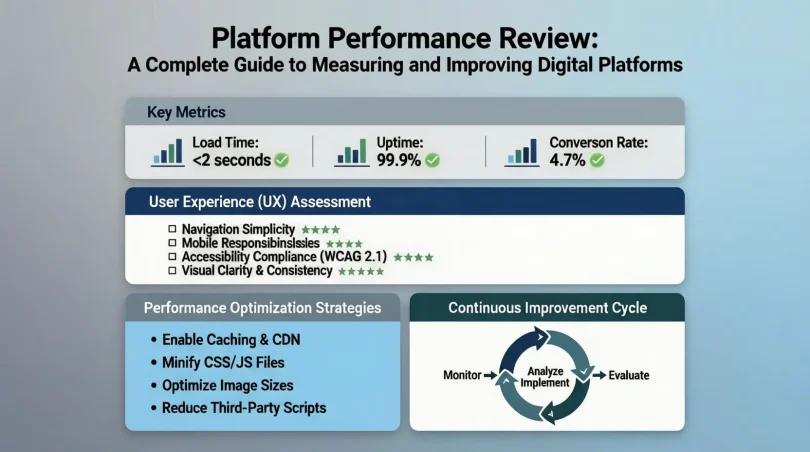
Once goals are defined, the next step is to choose the right metrics. Metrics are measurable values that show how the platform performs. Common metrics include page load time, response time, uptime percentage, and error rates.
User-focused metrics such as session duration and bounce rate are also important. Choosing the right metrics ensures the platform performance review stays focused and meaningful.
Step 3: Collect Performance Data
Data collection is a critical part of the review. This data can come from monitoring tools, analytics systems, and server logs. Manual testing and user feedback also provide valuable insights.
It is important to collect data over a reasonable period. Short-term data may not reflect real performance patterns. Consistent data collection improves accuracy.
Step 4: Analyze Technical Performance
Technical analysis looks at how the platform behaves under different conditions. This includes speed, stability, and scalability. Teams check how the platform performs during high traffic and peak usage.
This step often reveals bottlenecks such as slow databases or inefficient code. Fixing these issues improves overall reliability.
Step 5: Review User Experience
User experience is a key part of any platform performance review. Even a technically fast platform can fail if users find it confusing or frustrating.
Reviewing navigation, design consistency, and interaction flow helps identify usability issues. User surveys and feedback are especially useful at this stage.
Step 6: Evaluate Security and Reliability
Security and reliability are closely linked to performance. This step checks how well the platform protects data and handles failures.
Regular reviews reduce the risk of downtime and security incidents. They also ensure compliance with internal and external standards.
Step 7: Compare Results with Goals
After analysis, results should be compared with the original goals. This helps determine whether the platform meets expectations.
Gaps between goals and results highlight areas for improvement. Clear comparisons make reporting easier.
Step 8: Create an Improvement Plan
The final step is to create a practical improvement plan. This plan should prioritize issues based on impact and effort.
Small improvements can deliver quick wins, while larger changes may require long-term planning. A clear plan ensures the platform performance review leads to real action.
Benefits of Platform Performance Review
- Improves user satisfaction and trust
- Reduces downtime and technical failures
- Supports better decision-making
- Optimizes resource usage and costs
- Enhances security and stability
- Increases scalability and readiness for growth
- Strengthens brand reputation
- Encourages continuous improvement
Disadvantages / Risks
- Requires time and skilled resources
- Can be costly if tools are misused
- Poor data interpretation may lead to wrong decisions
- Over-focusing on metrics can ignore user needs
- Resistance to change within teams
- Short-term disruption during testing
Common Mistakes to Avoid
One common mistake is reviewing performance only once. Platform performance review should be continuous. Another mistake is focusing only on speed while ignoring usability and stability.
Some teams collect too much data without clear goals. This creates confusion instead of clarity. Ignoring user feedback is another serious error. Users often notice problems before tools do.
Finally, failing to act on review results makes the entire process useless. Reviews must lead to improvement.
FAQs
What is the main purpose of a platform performance review?
The main purpose is to evaluate how well a platform meets technical, user, and business goals. It helps identify strengths and weaknesses and supports continuous improvement.
How often should a platform performance review be done?
Ideally, reviews should be done regularly. Many teams conduct them quarterly, while others review key metrics monthly or continuously.
Is platform performance review only for large businesses?
No, it is useful for businesses of all sizes. Small platforms benefit by identifying issues early before they grow into major problems.
What tools are commonly used in a platform performance review?
Tools vary but often include analytics platforms, monitoring systems, and testing software. User feedback tools are also important.
Can a platform performance review improve security?
Yes, regular reviews help identify weaknesses that could lead to security risks. Strong performance often supports better protection.
How long does a platform performance review take?
The duration depends on platform size and complexity. Simple reviews may take days, while complex platforms may require weeks.
Expert Tips & Bonus Points
Experts recommend starting simple and improving over time. Focus on the most important metrics first. Always combine data with real user feedback.
Documentation is another key tip. Keeping records of each platform performance review helps track progress over time. Collaboration between technical and non-technical teams also improves results.
Finally, treat performance review as a learning process. Each review provides insights that make the next one better.
Conclusion
A platform performance review is a powerful tool for building reliable, user-friendly, and scalable digital platforms. It goes beyond basic speed testing and looks at the complete health of a platform. By reviewing technical performance, user experience, security, and business alignment, organizations gain a clear picture of how their platform truly performs.
For beginners, the process may seem complex at first. However, when broken into clear steps, it becomes manageable and highly valuable. Defining goals, choosing the right metrics, collecting data, and creating improvement plans are skills that grow stronger with practice. Over time, regular platform performance review becomes part of a healthy digital routine.
For intermediate users, deeper analysis and continuous optimization bring long-term benefits. Platforms that are reviewed and improved consistently earn user trust, reduce risks, and stay competitive. Most importantly, performance review encourages a mindset of continuous improvement. In a fast-changing digital world, this mindset is the key to long-term success and sustainable growth.