
Introduction
Tech startups are changing the way people live, work, learn, and do business. From mobile apps and online platforms to artificial intelligence and smart devices, tech startups are behind most modern innovations we use every day. For beginners and intermediate readers, understanding tech startups is important because they represent opportunity, creativity, and growth in the digital world.
In simple terms, tech startups are young companies that use technology to solve real problems in new and better ways. Unlike traditional businesses, these startups focus on innovation, speed, and scalability. Many of today’s global companies started as small tech startups with big ideas and limited resources. Over time, they grew by using smart strategies, strong teams, and the power of technology.
Tech startups also create jobs, support digital economies, and encourage entrepreneurship. They attract investors, inspire young founders, and push industries to improve. Whether you want to start your own business, invest in new ideas, or simply understand how modern technology companies work, learning about tech startups is a valuable skill.
This guide explains tech startups step by step in a clear and practical way. You will learn what tech startups are, why they matter, how to build one, common mistakes to avoid, and expert tips for long-term success. By the end, you will have a complete understanding of how tech startups work and how they shape the future.
What is Tech Startups?
Tech startups are early-stage companies that develop products or services based on technology. Their main goal is to create innovative solutions that can grow quickly and reach a large number of users. Most tech startups begin with a simple idea that solves a specific problem using digital tools.
These startups usually focus on areas such as software development, mobile applications, cloud computing, fintech, health technology, education technology, and artificial intelligence. Unlike traditional businesses, tech startups are designed to scale fast without needing heavy physical infrastructure.
A key feature of tech startups is experimentation. Founders test ideas, collect user feedback, and improve their products continuously. This flexible approach allows them to adapt quickly to market changes and customer needs. Many tech startups operate online, making it easier to reach global markets from the beginning.
Another important aspect of tech startups is funding. They often rely on angel investors, venture capital, or bootstrapping instead of traditional bank loans. This funding helps them grow faster and invest in technology, talent, and marketing.
Why is Tech Startups Important?
Tech startups play a major role in economic and technological development. They introduce new ideas that improve efficiency, accessibility, and user experience across industries. Many solutions that were once expensive or slow have become affordable and fast because of tech startups.
One important reason tech startups matter is innovation. They challenge old systems and create better alternatives. For example, online payment systems, digital learning platforms, and remote work tools all started as tech startup ideas.
Tech startups also create employment opportunities. As they grow, they hire developers, designers, marketers, and managers. This helps build skilled workforces and supports digital economies around the world.
Another reason tech startups are important is competition. They force established companies to improve their services and reduce prices. This benefits consumers and encourages continuous improvement.
Finally, tech startups support entrepreneurship. They inspire young people to think creatively, take risks, and build solutions for real problems. This mindset is essential for long-term economic growth and innovation.
Detailed Step-by-Step Guide
Step 1: Identify a Real Problem
Every successful tech startup begins with a real problem. Instead of focusing on technology first, focus on what people need. Observe daily challenges, industry gaps, or inefficiencies that can be improved using technology.
Step 2: Validate Your Idea
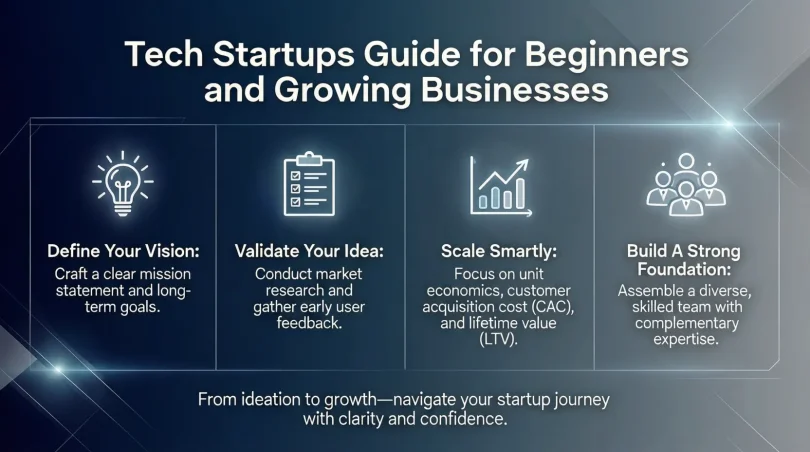
Before building a full product, test your idea. Talk to potential users, conduct surveys, and create simple prototypes. Validation helps you understand whether people are willing to use and pay for your solution.
Step 3: Build a Minimum Viable Product
A minimum viable product is a basic version of your solution with core features. It allows you to launch quickly and gather real user feedback. Many tech startups succeed by improving their product after launch instead of waiting for perfection.
Step 4: Form the Right Team
A strong team is essential for tech startups. Combine technical skills with business and marketing knowledge. Clear communication and shared vision help teams handle challenges effectively.
Step 5: Choose the Right Technology
Select technologies that are reliable, scalable, and cost-effective. Avoid over-engineering at the early stage. Focus on tools that support growth and easy updates.
Step 6: Secure Funding
Funding helps tech startups grow faster. Options include bootstrapping, angel investors, venture capital, or startup grants. Choose funding sources that align with your long-term goals.
Step 7: Launch and Market Your Product
After launching, focus on marketing and user acquisition. Use digital channels, content marketing, and customer referrals. Consistent promotion helps tech startups gain visibility and trust.
Step 8: Analyze and Improve
Track performance using data and analytics. Monitor user behavior, engagement, and feedback. Continuous improvement keeps your tech startup competitive and relevant.
Benefits of Tech Startups

- Encourage innovation and creative problem-solving
- Create new job opportunities
- Support digital transformation
- Offer scalable business models
- Attract global investment
- Improve customer experience
- Increase market competition
- Enable remote and flexible work
Disadvantages / Risks
- High competition in the market
- Limited resources at early stages
- Financial uncertainty
- Rapid technology changes
- Risk of idea failure
- Pressure to scale quickly
- Dependence on investor expectations
Common Mistakes to Avoid
Many tech startups fail because of avoidable mistakes. One common mistake is building products without proper market research. Without understanding users, even good ideas can fail.
Another mistake is focusing too much on features instead of value. Users care about solutions, not complexity. Overloading products with unnecessary features can reduce usability.
Poor team management is also a major issue. Lack of communication, unclear roles, and weak leadership can slow progress and cause conflicts.
Ignoring customer feedback is another critical error. Tech startups must listen, adapt, and improve continuously. Lastly, poor financial planning can lead to cash flow problems and early shutdown.
FAQs
What makes tech startups different from traditional businesses?
Tech startups focus on innovation, scalability, and technology-based solutions. Traditional businesses usually grow slowly and rely on established models.
How long does it take for tech startups to succeed?
Success timelines vary. Some tech startups grow quickly, while others take years. Consistency and adaptability play key roles.
Do tech startups need technical founders?
Technical founders help, but they are not mandatory. Many startups succeed through partnerships and outsourced development.
How do tech startups earn money?
They earn through subscriptions, advertising, licensing, freemium models, or direct sales depending on their product.
Are tech startups risky?
Yes, they involve risk. However, proper planning, research, and execution reduce failure chances.
Can small tech startups compete globally?
Yes. Technology allows startups to reach global audiences with minimal infrastructure.
Expert Tips & Bonus Points
Focus on solving one problem extremely well before expanding. Simplicity often leads to better adoption. Build strong relationships with early users and treat feedback as valuable data.
Invest in branding early. A clear message and professional identity build trust. Maintain flexibility and stay open to change as markets evolve.
Time management is crucial. Prioritize tasks that bring real value. Avoid distractions and unnecessary complexity. Most importantly, remain patient and committed to long-term growth.
Conclusion
Tech startups are powerful drivers of innovation and economic progress. They transform simple ideas into impactful solutions that improve lives and industries. For beginners and intermediate learners, understanding tech startups opens doors to entrepreneurship, investment, and digital careers.
Building a successful tech startup requires clear problem identification, strong validation, the right team, and continuous improvement. While challenges and risks exist, careful planning and adaptability increase the chances of success.
Tech startups are not just about technology. They are about people, creativity, and solving real problems in smarter ways. With dedication, learning, and strategic execution, anyone can participate in the exciting world of tech startups.
As technology continues to evolve, tech startups will remain at the center of progress. By understanding their structure, benefits, and risks, you are better prepared to take advantage of the opportunities they offer.